
If your kitchen feels like a chaotic catch-all, you are not alone. The good news is that stress-free kitchen design for healthy eating is not about having a magazine-worthy space. It is about setting up your kitchen so the healthy choice feels like the easy choice. I have learned this the hard way, usually at 5:47 PM, standing in front of the fridge like it is going to magically solve dinner and my emotions. When the counters are packed, the drawers are a disaster, and nothing is where it should be, stress goes up and patience goes down. That is when decision fatigue hits and suddenly the drive-thru feels like self-care.
Why a Stress-Free Kitchen Design Fosters Healthy Eating
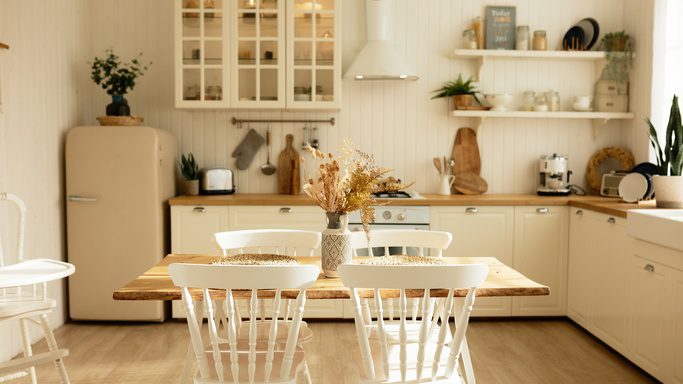
A stress-free kitchen is not just a “nice to have” upgrade. It is a healthy eating strategy. When your space is calm and functional, your brain has fewer obstacles between you and the meals you actually want to be eating. Here is what is really happening behind the scenes.
Stress and decision fatigue make quick food feel irresistible
When you are mentally tapped out, your brain looks for the fastest reward with the least effort. If your kitchen is cluttered, your tools are hard to find, and cooking feels like a full production, your brain will push you toward convenience food because it is easy, predictable, and available right now.
A calm kitchen reduces the number of small frustrations that pile up and steal your energy. Less friction means you are more likely to cook, more likely to assemble something balanced, and less likely to spiral into the pantry with a handful of crackers and a side of guilt.
Your environment shapes your choices more than motivation does
Most of us think healthy eating is about willpower. It is not. Your environment quietly nudges you all day long. If the first thing you see is chips on the counter, guess what wins. If the first thing you see is ready-to-grab protein, chopped veggies, and a simple plan, healthy eating starts to feel automatic. This is why kitchen design matters. You are building cues and defaults that make good choices easier.
A well-designed kitchen supports consistency, not perfection
Healthy eating does not need a perfect schedule or a perfect meal plan. It needs repeatable systems.
A stress-free kitchen design helps you:
- Start meals faster because items are where you expect them to be
- Clean up easier so you are not starting from chaos tomorrow
- Keep healthy foods visible and accessible
- Reduce emotional eating triggers like overwhelm, mess, and “nothing sounds good” fatigue
The goal is to create a kitchen that makes you feel capable
I want your kitchen to feel like a supportive friend, not a judgmental roommate. When your space works with you, you cook more often, snack more intentionally, and feel more in control around food. That is the real win. Not a perfect pantry. A kitchen that makes healthy eating feel doable on a random Tuesday when you are tired and hungry and everyone in your house is asking what is for dinner.
Clear the Countertop Clutter
If you want a calmer kitchen that supports healthy eating, start with the counters. Counter clutter creates mental clutter. When your space looks chaotic, cooking feels like work, and your brain goes hunting for the fastest food possible.
- Why it helps healthy eating
Clear counters make it easier to chop, portion, and assemble quick meals. Less friction means you are more likely to cook and less likely to snack mindlessly. - Quick countertop reset
- Remove anything that does not belong in the kitchen.
- Put away appliances you do not use weekly.
- Wipe the counter. Clean enough is good enough.
- Create one small landing spot for daily clutter.
- What can stay out
- Fruit bowl you actually use
- Cutting board
- Salt, pepper, one seasoning blend
- Water pitcher or bottle station
- What should move
- Chips, sweets, snack bins
- Papers, bags, random life stuff
- Extra appliances
- Mini prep station tip
- Keep a cutting board, knife, and scrap bowl ready.
When healthy cooking is easy to start, it is easier to follow through.
Create a Calming Atmosphere
A stress-free kitchen is not only about organization. It is also about how the space feels. When your kitchen feels calm, you are more likely to cook, more likely to slow down, and less likely to grab random snacks just to cope with the chaos.
Simple ways to make your kitchen feel calmer
- Clear one visual hotspot. Pick one area that stays clean most of the time, like a small counter section or the table.
- Soften the lighting. Use warm bulbs or under-cabinet lighting so the space feels less harsh at night.
- Add one natural element. A small plant, bowl of lemons, or a simple wood cutting board can make the kitchen feel more grounded.
- Choose hardware that matches the vibe you want. Even small updates can make your kitchen feel more intentional. If you love cozy, warm, and lived-in style, this guide on rustic kitchen hardware is a great place to start.
- Create a “calm cue.” A kettle, tea station, or a pretty bowl for fruit can remind you to pause before you react to stress with food.
Include a Dedicated Prep Station
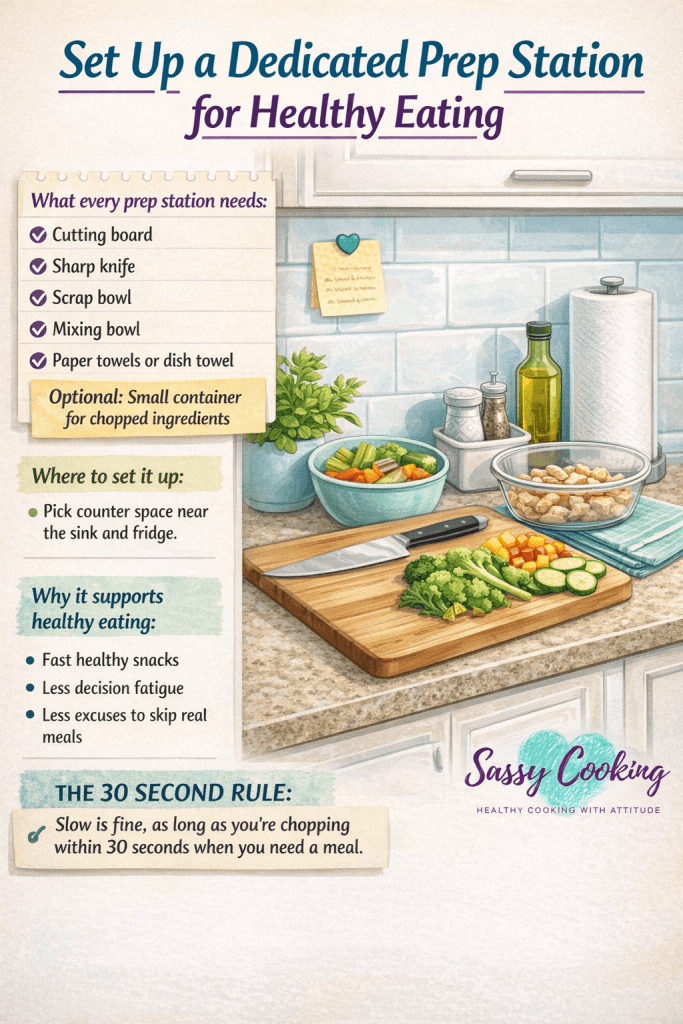
If healthy eating feels hard in your kitchen, it is often because cooking feels like a scavenger hunt. A dedicated prep station fixes that fast. It creates one reliable spot where you can start meals without clearing clutter, hunting tools, or losing momentum.
What a prep station needs (keep it simple)
- Cutting board
- Sharp knife
- Scrap bowl (for peels, wrappers, odds and ends)
- One clean mixing bowl
- Paper towels or a dish towel
- Optional: a small container for chopped ingredients
Where to set it up
Pick a counter space close to the sink and fridge if possible. You want easy access to washing produce, grabbing ingredients, and cleaning as you go.
Why it supports healthy eating
- Makes quick meals easier to start
- Reduces decision fatigue when you are tired
- Helps you prep healthy snacks in minutes (fruit, veggies, yogurt bowls)
- Encourages portioning and planning without feeling like “meal prep boot camp”
My favorite rule
If you can walk into your kitchen and start chopping within 30 seconds…
You will cook more often. That is the whole goal.
Organize Your Refrigerator Zones
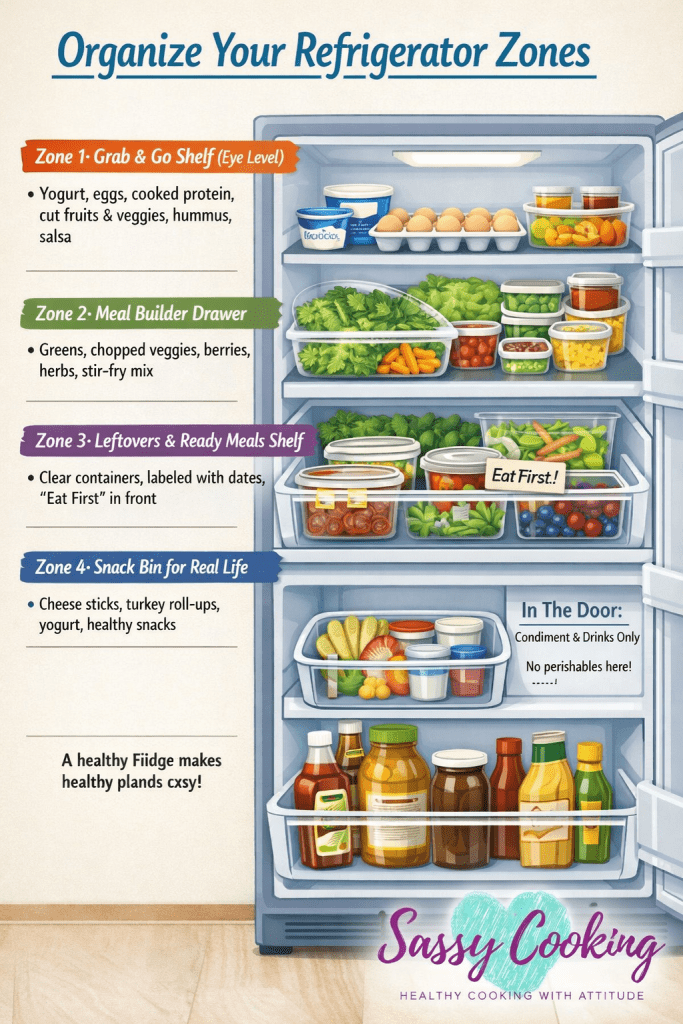
Your fridge should not be a surprise attack every time you open it. When you give it simple zones, healthy choices become faster, easier, and way more automatic.
Zone 1: Grab and Go Shelf (eye level)
Put the foods you want to eat most right where you see them first:
Zone 2: Meal Builder Drawer (produce drawer)
Use this for the “make a real meal” ingredients:
Zone 3: Leftovers and Ready Meals Shelf
Give leftovers one consistent home so they do not vanish into the back like they are on a witness protection program.
Zone 4: Snack Bin for Real Life
If you have a teen in the house (hi, Elena), this helps.
What not to store in the door
The door is the warmest spot, so keep it for: Condiments, pickles, beverages Save the more sensitive items for the main shelves.
A fridge with zones does not just look better. It reduces stress, cuts decision fatigue, and helps you make the healthy choice without needing a pep talk from the vegetable drawer.
Your home should serve your health, not hinder it. Designing a stress-free kitchen will facilitatehealthy eating, so you can reclaim your power over your cravings and your mood. Start with one drawer or one shelf today. As you clear the physical clutter, you might find the mental clutter disappears too.

Sign Up For Our Email List and Get This Short Starter Guide for Emotionally Healthy Eating FOR FREE
OR Grab My ULTIMATE Printable Weekly Planner and Starter Guide for only $7!
How To Design a Stress-Free Kitchen for Healthy Eating
Your kitchen could be the culprit in triggering those cravings. Organize your space to reduce stress and make healthy eating choices feel automatic.


